Home › Past Talks › Season 2026

Season 2026

2 Great Talks · 9 panelists · 2 video replays

The Data Center Outrage

Can AI Survive Without Data Centers?

Wednesday, October 14, 2026 @ 7pm Eastern

H. Mebane Turner Learning Commons, 1415 Maryland Ave, Baltimore, MD

Data centers are multiplying across the country — consuming electricity, water, and land at a scale few communities agreed to. Our panel takes on the question directly: what does AI actually cost us, and can it survive without this build-out?


Media Sponsor

Baltimore Fishbowl


Featuring a panel of experts

Carl Braun

Carl Braun

Co-Founder & CEO, the Data Center Group

Read bio

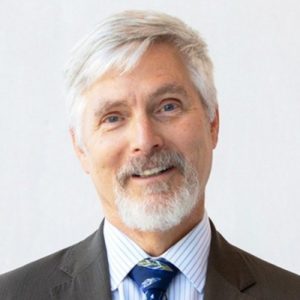
Carl Braun Co-Founder and CEO of the Data Center Group. Carl Braun brings a comprehensive background in land development, infrastructure strategy, and commercial real estate brokerage, with more than a decade of experience at Coldwell Banker Commercial Elite. As Co-Founder and Chief Executive Officer of the Data Center Group, Carl leads the firm’s mission to identify, qualify, and develop premier data center sites across the United States. With a wealth of knowledge and expertise in the data center arena, Carl has established himself as a trusted authority in site selection by, entitlement, brokerage, and development. His deep understanding of power and fiber infrastructure, zoning frameworks, and data center user requirements enables him to deliver exceptional results for investors, developers, and end users navigating the complex landscape of digital infrastructure. Through Carl’s leadership, the Data Center Group has successfully procured data center opportunities across multiple regions of Virginia and in ten additional states. His strategic vision and commitment to partnership have positioned the firm for continued regional and national growth, connecting landowners and direct users of all data center types—from edge facilities to hyperscale developments. Carl’s ability to combine technical insight with real estate expertise ensures that each project—from early land qualification to full-scale development—advances efficiently, strategically, and with long-term value creation in mind. His leadership continues to drive the Data Center Group’s reputation as a premier advisor in the rapidly expanding digital infrastructure sector.

Tyson Slocum

Tyson Slocum

Director, Public Citizen’s Energy Program

Read bio

Director of Public Citizen’s Energy Program. Tyson Slocum is the director of the Public Citizen’s Energy Program covering the regulation of energy markets, where he leads the organization’s efforts to promote sustainable, affordable energy and works to address the climate crisis. Tyson promotes an equitable energy transition that provides renewable energy and sustainable transportation solutions for working families. Tyson focuses on the regulation of electricity, natural gas, and petroleum markets, frequently testifying before the U.S. Congress. Tyson is an active intervenor on behalf of the public interest at the Federal Energy Regulatory Commission, and serves on two advisory committees to the U.S. Commodity Futures Trading Commission: Energy, and Environmental Markets and Market Risk. Tyson presents his research before Congress, including testifying in 2025 on the issue of AI data center energy demand. Tyson has appeared on CNN, CNBC, MSNBC, Fox News and Comedy Central’s “Colbert Report,” and has been quoted in publications such as Forbes, CNNMoney.com, The Hill, The New York Times, The San Francisco Chronicle, The Associated Press, the Los Angeles Times, and The Wall Street Journal. Tyson is a member of the faculty at the University of Maryland Honors College, where he teaches energy and climate policy, and was named Teacher Of The Year in 2017. Prior to joining Public Citizen in 2000, Tyson served as an analyst with the Institute on Taxation & Economic Policy. Tyson is an expert in issues dealing with regulation and deregulation of energy markets, the impact of mergers and lax regulations over electricity, petroleum and natural gas and federal energy legislation.

Jessica Stansbury

Jessica Stansbury

Director, Center for AI Learning, University of Baltimore

Read bio

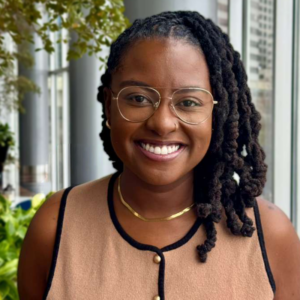
Dr. Jessica A. Stansbury is a higher education leader, educator, and AI strategist whose work focuses on helping institutions and communities navigate technological change while keeping people, learning, and public purpose at the center.

She serves as Director of Teaching and Learning Excellence at the University of Baltimore and is the founding director of the Center for AI Learning and Community-Engaged Innovation (CAILI). Through CAILI, Stansbury leads initiatives that connect artificial intelligence, higher education, workforce development, and community engagement, with particular emphasis on AI literacy, equitable access, and community AI readiness. Her work includes the development of the Human AI Landscape framework and AI Navigator model, which help organizations understand how people experience, interpret, and adapt to AI and translate those insights into meaningful action.
At the University of Baltimore, Stansbury has led institution-wide efforts in teaching innovation and AI adoption, including the implementation of enterprise generative AI access, faculty and student AI literacy initiatives, and the development of scalable faculty-development models. She also created the Teaching Scholars in Residence program, an extended faculty development experience centered on evidence-based teaching and the scholarship of teaching and learning.
Before moving into academic leadership, Stansbury spent 15 years as a psychology faculty member and program director, teaching courses including social psychology, research methods, and behavioral statistics. Her earlier career as an addictions therapist and behavioral researcher continues to shape her human-centered approach to technology, learning, and organizational change.
Her scholarship and public work examine AI adoption, institutional readiness, teaching and learning, moral judgment, and the human dimensions of emerging technology. Her perspectives on artificial intelligence and higher education have appeared in national publications and media, and she is a frequent speaker and contributor to conversations about the future of education and responsible AI adoption.
In 2026, Stansbury was selected as one of 100 Changemakers through the AI-Powered Women 100 Changemakers Initiative and participated in the AI-Powered Women Conference at MIT. Across her work, she advances a central premise: preparing for an AI-enabled future requires more than adopting new tools, it requires building the capacity of people and communities to understand, question, shape, and use them well.

Dr. Courtney C. Radsch

Moderator

Dr. Courtney C. Radsch

Journalist & AI governance expert

Read bio

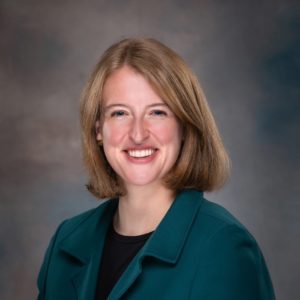
Dr. Courtney Radsch, PhD, is a global thought leader and experienced strategist working on AI governance, technology policy, and information ecosystems and was recently named one of the 100 Brilliant Women in AI Ethics. She currently leads the bicontinental Center for Media & Digital Governance at Open Markets Institute/Open Markets Europe, and is a nonresident fellow in the Center for Technology Innovation in Governance Studies at Brookings. Drawing on her her experiences as a journalist, scholar, diplomat, and human rights advocate she brings a unique perspective to understanding issues like the concentration of power in Big Tech (and now Big AI), the future of journalism, human rights, and democracy. She focuses on issues of information and power, tech policy and AI governance, the political economy of journalism and information ecosystems, competition and antitrust, and freedom expression. She writes and speaks frequently about these issues and has testified before Congress, parliaments and competition authorities around the world. Radsch has served on boards of directors as well as expert and advisory bodies for international organizations, media, and technology companies. She has advised the United Nations, EU, OSCE, OECD, World Economic Forum and provided expertise to technology platforms on policy and product design and impact. She has led advocacy missions and media assessments in more than a dozen countries and trained journalists and human rights activists around the world. Radsch is an accomplished leader and skilled public speaker with a track record of transformative results and objective-driven advocacy, writing and policy work. She has led multicultural, transcontinental and interdisciplinary teams and is committed to mentorship and aligning individual goals with organizational objectives. An architect of impactful advocacy campaigns and pioneering research initiatives, she also has a track record of impactful scholarship and popular analysis and commentary published in peer-reviewed journals and leading media outlets throughout the world. Her expertise on UN mechanisms and international human rights laws and norms is based on both empirical research and practical application. She is the author of Cyberactivism and Citizen Journalism in Egypt: Digital Dissidence & Political Change (Palgrave-Macmillan, 2016) based on her pioneering doctoral research, and editor of UNESCO’s flagship publication World Trends in Freedom of Expression and Media Development.


SPACE INVADERS: Global Tourism, Satellites, and Debris

Politics & commerce in space

Wednesday, March 25, 2026 @ 7pm Eastern

Goucher College, The Athenaeum Hall — 1021 Dulaney Valley Rd, Towson, MD 21204

Space tourism, mega-constellations, and orbital debris are reshaping who controls the sky above us. Our panel of aerospace financiers, lawyers and policy scholars examined the politics and commerce of an increasingly crowded orbit.


Media Sponsor

Baltimore Fishbowl


Featuring a panel of experts

Michael J. Dyment

Michael J. Dyment

NEXA Capital financial advisor in the aerospace industry

Read bio

NEXA Capital financial advisor in aerospace industry. Michael Dyment is Founder and Managing Partner of NEXA Capital Partners, LLC, and brings more than 40 years of experience advising institutional investors, government agencies, and executive leadership across the aerospace, transportation, and financial sectors. He is widely regarded as a trusted strategic advisor on corporate finance, M&A, business strategy, enterprise value dynamics, and long-term value creation for complex, capital-intensive aerospace and infrastructure programs. Mr. Dyment has served as a senior advisor on several landmark aerospace and space-based initiatives, including advising Iridium during its formal agreement establishing a global air traffic joint venture with major airlines and NAV CANADA, as well as supporting the financing and deployment of Iridium’s next-generation satellite constellation. He was also principal advisor to ITT on its $1.85 billion ADS-B contract award from the Federal Aviation Administration, providing deep insight into satellite-enabled airspace modernization, government procurement, and large-scale program execution. Throughout his career, Mr. Dyment has held officer, principal, senior managing partner, and managing director roles within the aerospace and transportation practices of A.T. Kearney, Booz Allen Hamilton, PwC, and Arthur Andersen. His client experience includes advising leading aerospace manufacturers such as Boeing, Embraer, and Rolls-Royce, as well as major airlines including American Airlines, SWISS, and easyJet. He has also served as a senior advisor to multiple FAA Administrators and is frequently sought by the media for commentary on aerospace, satellite systems, and aviation infrastructure policy. Mr. Dyment holds a Master of Science in Aeronautics and Astronautics from Massachusetts Institute of Technology and a Bachelor of Science in Engineering in Geodesy and Geomatics from University of New Brunswick. His background provides a rare combination of technical depth, financial rigor, and policy fluency directly applicable to spaceport feasibility, satellite-enabled systems, and next-generation aerospace infrastructure planning.

David A. Koplow

David A. Koplow

Professor of Law, Georgetown University Law Center

Read bio

Georgetown Law Professor on National Security Law. David A. Koplow is a Scott K. Ginsburg Professor of Law at the Georgetown University Law Center in Washington, D.C., where he has been on the faculty since 1981. His primary fields for teaching and scholarship involve public international law and national security law, with a particular emphasis upon arms control, non-proliferation, and outer space. In addition, he has directed a legal clinic in which students provide pro bono representation to refugees seeking asylum in the United States due to fear of persecution in their homelands. He has published six books and numerous law review articles regarding treaty negotiation, verification, and implementation, and regarding the intersection between international legal standards and U.S. constitutional law. He has served in government as Attorney-Advisor, and as Special Assistant to the Director, at the U.S. Arms Control and Disarmament Agency from 1978 to 1981; as Deputy General Counsel for International Affairs at the U.S. Department of Defense from 1997 to 1999; as Special Counsel for Arms Control to the General Counsel of the Department of Defense from 2009 to 2011; and as a consultant to NASA 2017-19. He is a graduate of Harvard College and the Yale Law School and was a Rhodes Scholar. Webpage at Georgetown Law

Amber McIntyre

Amber McIntyre

Aerospace Industries Association

Read bio

Senior Director of Civil Space at the Aerospace Industries Association. Amber McIntyre is the Senior Director of Civil Space at the Aerospace Industries Association (AIA). A seasoned space policy expert, she brings extensive experience in federal and international space policy, having led key initiatives across multiple U.S. government agencies. McIntyre joined AIA from the National Space Policy Council in the Executive Office of the Vice President, where she served as Director of International Space Policy. She led U.S. space policy coordination across agencies like NASA, the State Department, and the Department of Defense, advancing national security, global partnerships, and the Artemis Accords. Prior to her time at the White House, McIntyre served as Counselor for Interagency and International Relations at NASA, where she advised the Administrator on space diplomacy, international partnerships, and strategic agency priorities. She also worked at the U.S. Mission to the United Nations as Deputy Chief of Staff for Operations, managing key diplomatic engagements and intergovernmental relations. Earlier in her career, she held various public affairs and policy roles at the U.S. Department of State, supporting foreign policy initiatives across Africa, Europe, Asia, and Latin America. McIntyre holds a B.A. in political science and religion from Florida State University, an M.P.A. from American University, and a business administration certification from Georgetown University.

Katherine Melbourne

Katherine Melbourne

Center for Space Policy and Strategy, The Aerospace Corporation

Read bio

Katherine Melbourne is a policy analyst in the Center for Space Policy and Strategy at The Aerospace Corporation. In this role, she writes about national security space strategy issues informed by technical understanding, and performs international comparative research. Prior to joining Aerospace, Melbourne was a systems engineer at Ball Aerospace (now BAE Systems) where she worked on a national security program and served on the commissioning team as a wavefront sensing scientist for the James Webb Space Telescope helping to align its mirrors. Melbourne designed a wargame for the United States Space Force on cislunar operations and strategy during her time as graduate research assistant at the University of Colorado Boulder. She has previously published work on stellar activity and its effects on exoplanet habitability and assisted with drafting and negotiating agreements between NASA and its foreign partners. Melbourne earned a bachelor’s degree in astrophysics from Yale University and a master’s degree in aerospace engineering from the University of Colorado Boulder. Melbourne received a Future Space Leaders Foundation grant and the Secure World Foundation’s Dr. Michael Simpson scholarship in 2025. She is also a Brooke Owens Fellowship alumna.

Peter L. Hays

Moderator

Peter L. Hays

Senior Policy Advisor and Professor, George Washington University

Read bio

Senior Policy Advisor and Professor. Dr. Hays is a professorial lecturer of Space Policy and International Affairs at George Washington University’s Space Policy Institute, Space Chair at Marine Corps University, and a senior policy advisor with Falcon Research. He is a Fellow at the Prague Security Studies Institute, Space Advisor for the Nonproliferation Policy Education Center, and Nonresident Senior Affiliate with the Aerospace Security and Missile Defense Projects at the Center for Strategic and International Studies. He supports the Space Staff in the Pentagon and has been directly involved in helping to develop and implement major national security space policy and strategy initiatives since 2004; he also serves as a senior advisor on governance, force design, and strategic messaging issues. Dr. Hays was presented the National Intelligence Professional Award by the Director of National Intelligence in 2014 and was chosen as the SAIC National Security Solutions Employee of the Year in 2008. He served as a staff augmentee at the White House Office of Science and Technology Policy in 1988 and at the National Space Council in 1990. Dr. Hays serves on the Center for Strategic and International Studies Missile Defense Project Advisory Board, was a term member of the World Economic Forum’s Global Agenda Council on Space Security from 2010-2014, and is a member of the editorial board for Space and Defense and Astropolitics. He holds a Ph.D. from the Fletcher School and was an Honor Graduate of the USAF Academy. Dr. Hays served as an Air Force officer from 1979-2004; flew C-141 cargo planes; and taught international relations, defense policy, and space policy courses at the USAF Academy, School of Advanced Airpower Studies, and National Defense University; he now teaches the air- and spacepower seminars at the Marine Corps School of Advanced Warfighting at Quantico and the Space and National Security and Science, Technology, and National Security Policy graduate seminars at GW. Primary research interests are defense policy and space security. Recent publications: On the Precipice: Artificial Intelligence and the Climb to Modernize Nuclear Command, Control, and Communications (Washington: Federation of American Scientists, January 2026). What’s Possible to Build in 39 Months with $175 Billion, in Henry D. Sokolski, ed., Golden Dome: What’s Its Story? (Washington: Nonproliferation Policy Education Center, 2025). Strategic Implications of Hypersonic Attacks from Space, AirSpace Journal, November 2025. The Evolving United States Space-Enabled Reconnaissance-Strike Complex: Theory, Practice & Challenges, Hellenic Air Force Review, 134 (April 2025): 54-69. Peter Hays bio at GWU Peter Hays contributes to book Oxford Handbook of Space Security

← All seasons
Next talk →

Great Talk Inc is a 501(c)(3) nonprofit organization

Generously supported by our Gold Series Sponsors


Great Talk Gold Series Sponsors


View Videos of Past Talks!